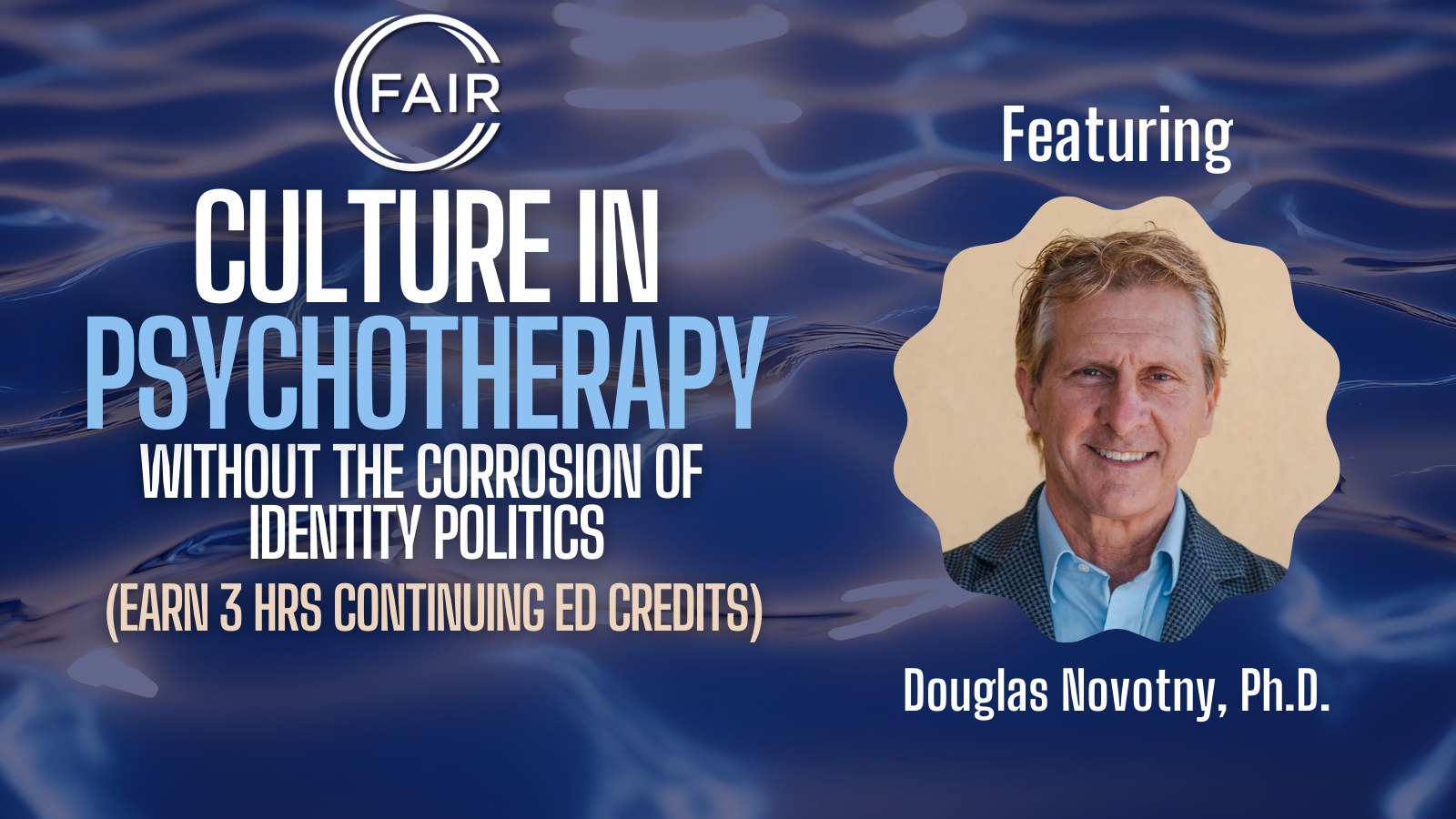
3 Continuing Education Hours for Completion
Amid today’s culture wars, Identity Politics corrodes the teaching and practice of psychotherapy, especially in the widely-misunderstood realm of “culture” and “diversity.” Many people on both sides feel distrustful, alienated and/or demoralized. This course gives a structural model for clinical work that re-enlivens moral depth — without moralism. The goal is to clarify concepts and conflicts that impact daily life and clinical settings. It aims to facilitate engagement with patients and colleagues, and within ourselves, even as we grapple with vital and controversial issues.
Research indicates that ideological diversity — seeing topics from different points of view — improves psychology. This course builds on that with Jon Haidt’s ‘Moral Foundations Theory,’ a cultural lens to grasp differences across cultures, within cultures, and the daily experiences of clients and students encountered by therapists. Specific clinical applications will be explored, e.g. the clinical utility of fluency with “disgust.” Critiques and competing moral models will be considered. This structural model helps explain interpersonal divisions (and intra-psychic ones), plus ways to bridge divisions with deep cultural understanding and relational attunement.
Your Positive Sum, LLC is approved by the American Psychological Association to sponsor Continuing Education for psychologists. Your Positive Sum, LLC maintains responsibility for this program and its content.